

Diaper changing is an essential part of parenting that often comes with a mix of challenges and bonding moments. For new parents, mastering this skill can feel overwhelming at first. However, with the right techniques and a bit of practice, it becomes a routine task that can be done with confidence and ease.
Understanding the importance of proper diaper changing not only keeps babies comfortable but also promotes good hygiene. Parents need to be equipped with the right tools and knowledge to make each change as efficient as possible. This article explores effective strategies, tips, and the best practices to ensure a smooth diaper changing experience for both parents and their little ones.
What Is Diaper Changing?
Diaper changing involves removing, cleaning, and replacing a baby’s diaper. This routine task is critical for ensuring a baby’s hygiene and comfort throughout the day.
Importance of Diaper Changing
Diaper changing plays a vital role in maintaining a baby’s health. Regular changes prevent diaper rash and skin irritation, which can lead to discomfort and crying. Proper diaper changing supports good hygiene, reducing the risk of infections. Consistent routines help parents bond with their babies, allowing for nurturing interactions during a typically necessary task.
Common Challenges
Diaper changing may present various challenges for parents.
- Time constraints: Busy schedules can make finding time for frequent changes difficult.
- Messiness: Diaper contents can easily cause spills, necessitating quick clean-up.
- Baby’s movement: Babies often squirm, making the process more challenging.
- Finding the right supplies: Running out of diapers or wipes can complicate changes.
- Sensitive skin: Some babies may exhibit reactions to certain diaper brands or materials.
Navigating these challenges can enhance a parent’s diaper changing skills, making the process more efficient and comfortable for both baby and parent.
Best Practices for Diaper Changing
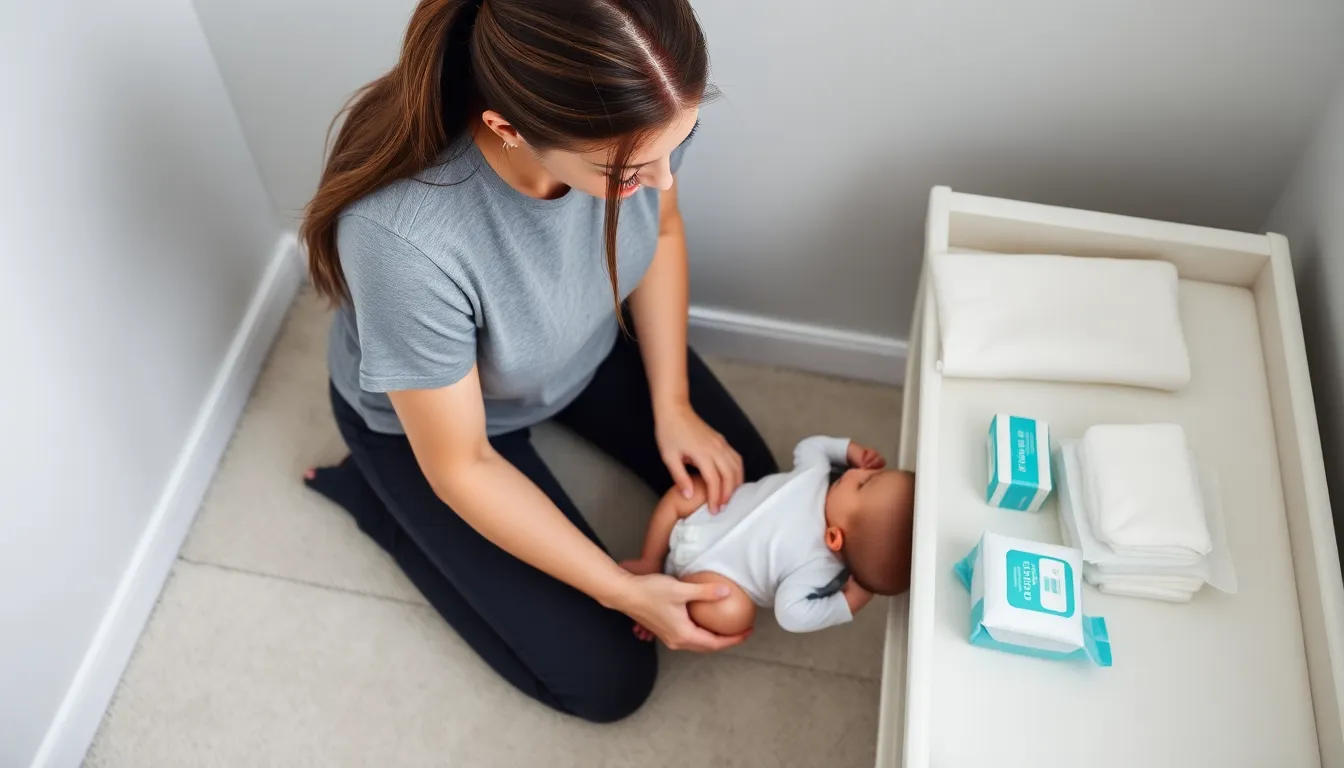
Effective diaper changing practices enhance comfort and hygiene for infants. Implementing these best practices makes the process more efficient for parents.
Choosing the Right Diaper
Choosing the right diaper ensures optimal fit and absorbency. Consider the following factors:
- Size: Select a diaper that matches the baby’s weight range, typically indicated on packaging.
- Material: Opt for breathable materials to reduce skin irritation. Keep an eye out for hypoallergenic options to prevent allergic reactions.
- Absorbency: Evaluate absorbency levels based on the baby’s age and output frequency. Super absorbent diapers may be necessary for overnight use.
- Style: Choose between disposable and cloth options. Consider lifestyle, convenience, and environmental impact when making a decision.
- Fit: Ensure a snug fit around the legs and waist without gaps, preventing leaks and ensuring comfort.
Diaper Changing Techniques
Implementing effective diaper changing techniques simplifies the process. Follow these key steps:
- Preparation: Gather needed supplies, including a clean diaper, wipes, barrier cream, and a changing pad.
- Safety: Always keep one hand on the baby when using a changing table to prevent falls. Use a safe surface, like a dedicated changing table or soft flat area.
- Removing the Dirty Diaper: Unstrap the dirty diaper, folding it inward to enclose mess. Use wipes to clean the baby’s backside, wiping from front to back.
- Applying the Clean Diaper: Slide a clean diaper under the baby with the adhesive tabs behind. Fasten securely, ensuring it’s snug but not too tight.
- Disposing of Waste: Securely seal the dirty diaper in a diaper disposal bag before placing it in a trash can. Maintain a clean environment by promptly disposing of waste.
- Washing Hands: Always wash hands after diaper changes to maintain hygiene. Use soap and water or hand sanitizer if needed.
Incorporating these best practices in diaper changing creates a smoother and more comfortable experience for both baby and parent.
Tools and Supplies for Diaper Changing
Having the right tools and supplies streamlines the diaper changing process, enhancing efficiency and comfort for both parent and baby. Key items range from necessities to optional accessories that can improve the experience.
Essential Supplies
- Diapers: Select the appropriate size, style, and absorbency level to ensure optimal fit and comfort.
- Wipes: Use gentle, hypoallergenic wipes or moistened cloths for effective cleanup.
- Changing Pad: Utilize a waterproof changing pad to protect the surface and ensure hygiene during changes.
- Diaper Cream: Apply barrier creams to prevent diaper rash and protect delicate skin.
- Trash Bags: Keep a supply of scented trash bags for hygienic disposal of used diapers.
- Hand Sanitizer: Use alcohol-based hand sanitizer for quick hygiene immediately after changing.
Optional Accessories
- Changing Table: Consider a dedicated changing table for a specific, organized space.
- Diaper Caddy: Use a caddy to store supplies in one accessible location for easy retrieval.
- Portable Changing Mat: Carry a portable changing mat for on-the-go diaper changes.
- Diaper disposal system: Invest in a diaper disposal system for odor control and convenience.
- Bibs: Keep bibs on hand for mealtime changes to manage any spills during dressing.
Having these tools and supplies ensures a well-prepared setup for diaper changing, making the process efficient and comfortable.
Tips for Stress-Free Diaper Changing
Diaper changing can become a smoother experience with the right techniques. Implementing a few strategies can significantly enhance comfort for both parents and babies.
Creating a Comfortable Environment
Creating a soothing atmosphere fosters a calm diaper changing experience.
- Choose a Quiet Space: Select a location free from distractions, allowing the focus to remain on the task at hand.
- Adjust Lighting: Use soft lighting to create a peaceful environment, reducing visual stress for both baby and parent.
- Maintain Temperature: Ensure the changing area is warm enough, as babies can be sensitive to temperature changes during diaper changes.
- Keep Supplies Within Reach: Organize all necessary supplies like diapers, wipes, and creams nearby to minimize movement and maintain efficiency.
Engaging Your Baby
Engaging a baby during diaper changes keeps them occupied and less fussy.
- Use Toys: Offer a few small, safe toys or rattles within reach to redirect attention and prevent fussiness.
- Sing Songs: Singing familiar songs or nursery rhymes creates a comforting routine and entertains the baby.
- Make Eye Contact: Establish connection through eye contact and smiles, which can soothe a baby and make them feel secure.
- Talk or Read: Use a gentle voice to talk or read a short story, promoting interaction and distraction during the process.
Mastering the art of diaper changing is an essential part of parenting. With the right techniques and tools parents can transform this task into a seamless routine. By focusing on comfort hygiene and engagement parents can create a positive experience for their little ones.
Every diaper change is an opportunity for bonding and connection. Embracing the challenges that come with this task not only builds confidence but also enhances the parent-child relationship. With practice and patience diaper changing can become less daunting and more enjoyable.

